

100+ startups take on horse racing's biggest challenges
The Future of Racing program is pairing the sport's biggest challenges with the startups bold enough to tackle them

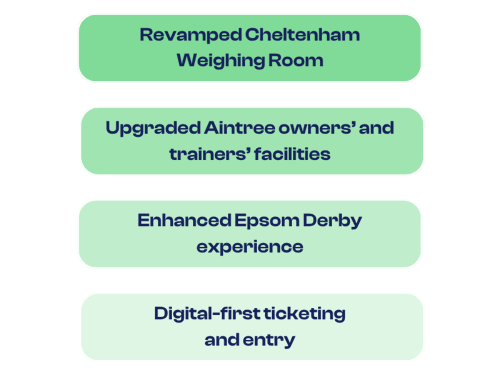
Racegoer numbers in Britain have shown encouraging signs of recovery, with attendance up by over 8,000 at this year's Festival and a broader 5% increase recorded in 2025. Buoyed by this, The Jockey Club also recently announced a new £100m investment in the spectator experience at famous tracks including Cheltenham, Aintree, and Epsom, with CEO Jim Mullen stating that he wants customers at these venues “to enjoy the sport, enjoy the hospitality and the overall customer experience so that they come back more often.”
Yet the industry knows it cannot be complacent. Prestige alone will not sustain the sport.
Last year’s publication by the British Horseracing Authority (BHA) of its findings from Project Beacon, the most comprehensive study undertaken into how the public sees racing, quantified both the challenge and the opportunity. It identified 8.5m people who might become racing fans with the right approach, and a similar number of casual fans who currently engage only with major events. But the research also exposed challenges: concerns about horse welfare; a lack of emotional connection; and a perception that racing can be complex for new followers.
“Over the last decade, racing has not always been the first-choice sport for the younger generation,” says Seb Butterworth, Strategic Racing Director at Flutter UKI. “Today it must compete with modern sports for people's attention, and it needs to keep pace with innovation and modernization if it is to capture the fans of tomorrow.”
That conviction led to the Future of Racing Innovation program, a collaboration between Flutter and the British Horseracing Authority designed to connect the sport's most pressing challenges with the startups best placed to solve them.
£100m
The Jockey Club's new investment in the UK racing experience


A pipeline for ideas
Flutter has a long-standing and direct stake in the sport of horseracing, highlighted by the 34m bets it took across 2.7m active customers at Cheltenham 2026. With the close involvement of its Emerging Technology team, the company has given the program access to something the industry could not easily assemble on its own – a global startup network.
The program attracted more than 100 applicants from as far afield as Australia, which were narrowed to 25 interviews, then 10 final pitches, each assessed against Beacon's priorities. The strongest candidates identified a clear problem and solution, offered a credible team and a proposition that could be trialled without excessive cost.
In February, the 10 finalists presented to around 40 industry figures, from racecourse operators and trainers to venture capitalists. The pitches spanned welfare, fan engagement and racecourse operations, and the response was overwhelmingly positive.
Horse welfare sits at the heart of the program. Butterworth is unequivocal about its importance. “The welfare of our horses should be British Racing's number one priority," he says. "We need to deliver full cradle-to-grave traceability and make continuous improvements to the welfare and safety of our horses, both on and off course. If we can truly deliver the very best in class in equine welfare, we can begin to put the horse at the center of the sport. These amazing animals are the USP – they're why we all love the sport, and they’re what make racing so very special.”
Two startups are already working to turn that ambition into reality. One has installed cameras at a training yard to track a horse's gait over time, using the technology to flag potential issues before they become visible to the human eye. Another continues to develop its conversations with UK racecourses about how it can help with engagement focusing on wider sports fans to drive more people through the doors to enjoy a day at the races.
In terms of reducing complexity for new fans, pitches included an app that racecourses could use to provide ticketing, event information, loyalty offers and other services to customers – all in one place – and another that consolidates all the betting information for an event, with built-in AI to understand and answer user questions.
From pitch to pilot
The program now enters an important phase: turning enthusiasm into working pilots. Flutter and the BHA are helping connect each startup with the relevant industry bodies, whether that means introducing a welfare-focused company to the BHA's Horse Welfare Board or aligning a fan-engagement platform with a racecourse group.
The pilots are designed to be light touch. "We're not asking them to build a bespoke product," says Dan Wyles, Emerging Technology Strategist at Flutter. "It's about what's readily available, what's really simple and easy for them to do." He adds: "The amount of innovation taking place in racing is eye-opening and encouraging."
A follow-up event is planned at York racecourse in May, where the program aims to showcase the progress of several pilots, with the ambition to have a solution live at a stable or racecourse by the end of 2026.
Dan O'Sullivan, Head of Programme Delivery at the BHA, says the reception from across the industry has been unanimously positive. "It's a great example of bookmakers and racing working together for the benefit of the sport," he says. "We all want to maximize the opportunity and build on the positivity and ideas we saw pitched."
For Flutter, the program is not about directing the industry but equipping it to move forward. As Wyles puts it: "We'd love to see the racing industry pick these up. We're here to support, here to help. But it's their choice to take them forward and help the sport grow."

This is part two of our Future of Racing series - the startups, the ideas, and what happens when they hit the track.