

3. What does a customer actually see when the tool suggests a bet?
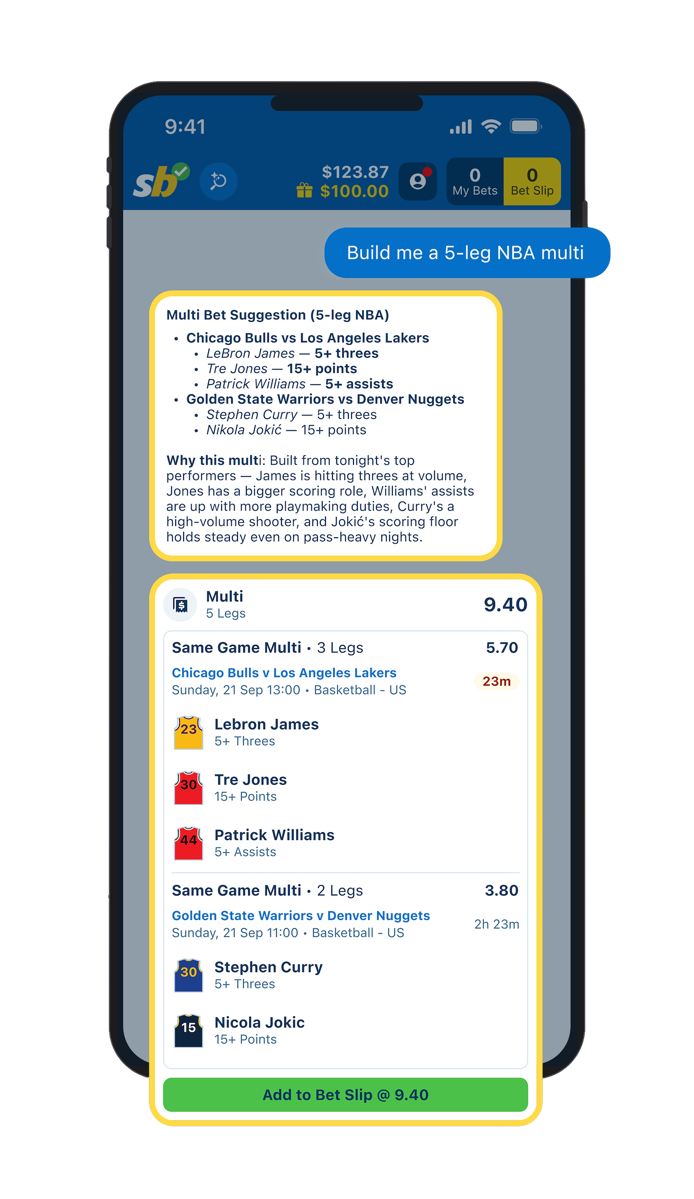
We built Ask AI to help customers explore sporting events and understand the factors that may sit behind a betting option. When a bet is suggested, customers see supporting information explaining why that option was generated. That may include relevant insights and, where available, recent performance for the team or player involved. Our aim is to give useful context so customers can make informed decisions.
Ask AI can suggest options, but the choice to place a bet, change it or walk away stays with the customer. Plenty of people use it purely to explore stats and insights. Responsible gaming messaging is built into the experience, and Ask AI sits within Sportsbet's existing responsible gaming framework.
4. How does responsible gaming factor into each interaction?
Customer safety is a key consideration in how we designed Ask AI. It includes safeguards intended to identify certain queries that may indicate a customer could benefit from additional support. When those safeguards are triggered, Ask AI does not provide betting suggestions, and the customer is directed to responsible gaming information and support resources.
These measures work alongside Sportsbet's broader responsible gaming tools, controls and customer protection processes. Ask AI is designed to support those protections, and responsible gaming considerations remain central to the experience.
5. What has putting this in front of live customers taught you that testing could not, and what did FanDuel contribute from their own AI bet builder?
There is nothing like learning with a live product. We are still in beta, but real customer interactions have been invaluable and have driven how we refined the model and experience. People may say they want something, but you learn so much from how they actually choose to engage.
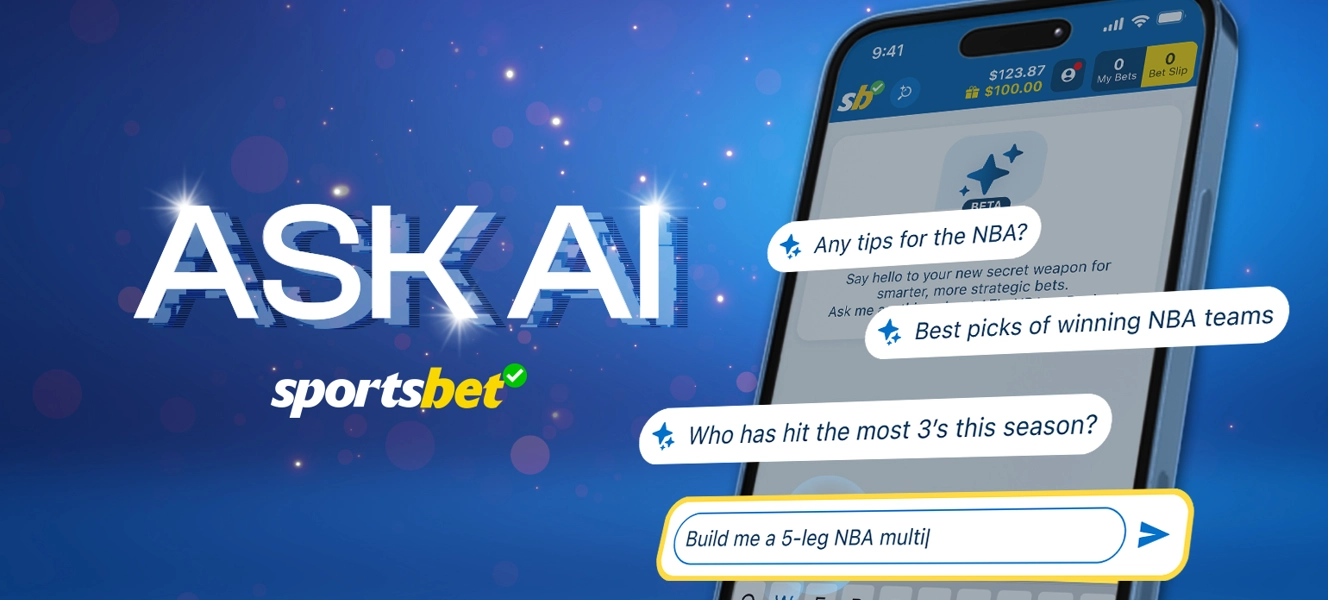
The clearest example is the suggested prompts – pre-written queries so that customers don’t have to write their own. Examples include “Build me a three-leg NBA multi”, “Give me AFL tips for the weekend”, and “Which horse has the best record on wet tracks?” They account for around half of all queries, which makes getting them right a priority. Another example is that we started in racing, helping customers make sense of form quickly, and it was their feedback that then took us into other sports.
FanDuel helped a great deal there, sharing research from their own in-app tool, Ace AI, so we could compare how customers used each product and work through shared problems such as building trust in AI. It was really collaborative and a strong example of the Flutter Edge in terms of how our brands’ insights can be leveraged across the group.
6. Where does Ask AI go from here?
I would like AI to help us build experiences that excite our customers and keep pace with how they naturally search, explore and bet. Beyond that, we want to keep building AI use cases that are of real use to them. The technology is moving quickly, so there will be a lot more we can do.